UConn HomeSchool of Law
PROSPECTIVE STUDENTS STUDENTS ALUMNI/AE LIBRARY FACULTY ACADEMICS

This site will work and look better in a browser that supports web standards, but it is accessible to any browser or Internet device.

Asylum and Human Rights Clinic

NEW: The UConn Foundation's Annual Report features a case of the Asylum and Human Rights Clinic as one of its Stories of Achievement.

In the Asylum and Human Rights Clinic, law students represent refugees who have fled from persecution and are seeking asylum in the United States. It provides opportunities for law students to provide much-needed legal representation to clients while exercising and refining their legal skills and learning about other countries and cultures. Profiles of some recent cases handled by law students in the Asylum and Human Rights Clinic are set out below, followed by a description of the program's structure and requirements, and information about the Clinic's faculty.

Profiles of Recent Clinic Cases

The Asylum and Human Rights Clinic's cumulative record of success has been remarkable. From the program's inception in the fall of 2002 through the summer of 2007, the Clinic has represented clients in 46 cases that have reached a final decision. In 39 of those cases, the client was granted asylum or related relief. (In many cases, the asylum grant also extended to the client's spouse and children.) This 85% success rate is more than three times the average national "grant rate" of about 25% in asylum cases.

During the 2006-07 academic year, students in the Asylum and Human Rights Clinic represented clients from many different countries, including Armenia, Burundi, Congo, Egypt, Guatemala, Guinea, and Haiti. Clinic students handled ten cases that resulted in decisions, eight of them favorable to our clients. Although we like to celebrate victories, the most challenging and skillful work often goes into those cases that involve unsettled, cutting-edge issues, where even the strongest presentation may fail to convince an immigration judge to push the boundaries of the law. Here are descriptions of some of the Clinic's recent cases, beginning with two where asylum was denied, but excellent advocacy has created a strong basis for appeals to higher courts:

  • At a hearing in the Hartford Immigration Court, Kirsten Rigney '07 and Steven Brescia '07 represented a woman who fled her West African homeland six years ago, after her husband, a political dissident, was imprisoned and tortured. Her husband was granted asylum here, but due to paperwork errors on his part, our client lost the opportunity to obtain "derivative" asylum as his spouse. She now has three U.S. citizen daughters. As a child, our client was forced to undergo female genital mutilation (FGM), and her greatest fear is that her daughters will face the same fate. FGM has been recognized as a form of gender-based persecution, but the courts have yet to determine whether a mother can be granted asylum when her deportation would produce a wrenching choice of leaving her citizen children behind, or taking them to a country where they are likely to be subjected to FGM. At the hearing, Steve and Kirsten conducted a moving direct examination of their client, presented testimony from her husband and an expert witness, and submitted extensive medical and country conditions evidence supporting her claims. The judge found the evidence credible, but deemed it legally insufficient to establish eligibility for asylum. Kirsten and Steve continued their work on the case by preparing an appeal to the Board of Immigration Appeals; that decision is now pending.

  • In another hearing in the Hartford Immigration Court, Amarilis Carrion '08 and Lila McKinley '08, building upon work done the previous semester by Natalie Braswell '07 and Kenndra Leary-Poole '06, represented a 14-year old Central American boy who received repeated death threats from the notoriously brutal Mara 18 gang. The Clinic students faced the difficult task of working with a young client who had been greatly traumatized by his experiences as they prepared the case for hearing. They conducted a sensitive and effective direct and redirect examination of our client, and presented testimony from the boy's mother and from an historian who has studied Central American gangs, who explained why a boy in our client's situation would face a great risk of being killed if he returns. The immigration judge found our client credible, and acknowledged that risk that he faces is real, but concluded that his persecution would not be based on a "political opinion" or "membership in particular social group" within the meaning of the asylum laws. This case too raises important and unsettled issues that will require resolution by a federal appeals court. An appeal is ongoing.

  • Appearing before a visiting immigration judge from San Francisco in the Hartford Immigration Court, Aryanna Abouzari '07 and Lauren Jannelle '07 won a grant for asylum on behalf of a woman from Western Africa who was repeatedly detained, raped, and threatened with indefinite imprisonment because of her participation in peaceful anti-government demonstrations and her work for an opposition political party. During the previous semester, Lauren and Hannah Chemerynski '06 had represented the client during an initial hearing before the Department of Homeland Security, which rejected her account as implausible. In immigration court, Lauren and Aryanna, through detailed testimony, supporting documentation, and an effective closing argument, convinced the judge that the government's credibility concerns were unwarranted.

  • Joshua Jackson '07 and Rich Morris '08 convinced an immigration judge to grant asylum to their client, a police detective who fought against corruption in his home country. Their client's efforts to prosecute a gangster who had close ties to high government officials, and his refusal to falsify evidence to serve the government's ends, culminated in a severe beating administered by government agents and threats that his family would be killed. At the hearing, the students presented riveting testimony from their client that led the judge to remark, "This is just like a Hollywood movie." In his oral opinion, the judge said that he was convinced by the arguments in the students' legal brief that their client's refusal to give in to corruption was perceived as a challenge to the legitimacy or authority of the regime, and therefore qualified as a form of persecution on account of political opinion.

  • Two clients who were imprisoned and brutally tortured by the government of the Democratic Republic of Congo because of their participation in peaceful anti-government demonstrations were granted asylum in separate hearings. Bradford Scudder '08 and Stein Helmrich '07 departed Connecticut before dawn to represent their client at a 7:30 a.m. hearing at the Department of Homeland Security's Asylum Office in Lyndhurst, New Jersey. At the hearing, Brad and Stein presented medical and psychological evaluations that corroborated our client's account of his torture, and helped their client to respond effectively to the asylum officer's questions. In the other hearing, held before an immigration judge in Hartford, Amy Coyle '08 and Daniel Crisp '08 presented a powerful direct examination and extensive documentary evidence on behalf of their client, who had been severely tortured in a military prison after he helped to organize a protest march. After their client testified, the government attorney indicated that he no longer opposed a grant of asylum, and the judge quickly granted relief.

  • Stefanie Hennes '08 and Lindsey Mongeon '07 convinced an immigration judge in Hartford to grant asylum to their client, a Coptic Christian woman from Egypt, who was threatened, harassed and raped by Islamic extremists, and could not obtain protection from the Egyptian government. Stefanie and Lindsey effectively refuted the government attorney's arguments that our client could have avoided persecution by moving to a different part of Egypt, and showed that U.S. State Department reports that minimize the extent of persecution against Coptic Christians are refuted by other evidence.

  • In the U.S. Court of Appeals for the Second Circuit, Clinic students achieved a favorable outcome for a client from Haiti. The Board of Immigration Appeals had found that our client, a civics teacher who had denounced government corruption, had failed to prove that the mobs that attacked his house were retaliating against him for his political teachings, despite the absence of any other apparent motive for these attacks. In response to the brief that Shannon Bratt '06 and Hinna Mushtaque '06 filed with the Court of Appeals, the United States Attorney agreed that the Board's decision should be overturned, and the case has been remanded to the agency for further consideration.

Description of Program

The Asylum and Human Rights Clinic is an intensive, eight-credit program in which law students learn substantive law and legal skills while serving the community and promoting human rights. The Clinic is offered in both the fall and spring semesters. Students who have participated in the program have the opportunity to continue their casework in a subsequent semester, by enrolling in Advanced Clinic Fieldwork, for which they may receive 1-3 credits.

Clinic students represent clients who have fled from persecution in their home countries and are seeking the right to remain in the United States. The tasks involved in a typical case include:

  • Conducting multiple interviews with the client;
  • Researching human rights conditions in the client's home country;
  • Preparing the asylum application and affidavits from the client and witnesses;
  • Locating, assembling and organizing corroborating evidence that helps to prove that the client has been persecuted, and/or has a well-founded fear of persecution, on account of race, religion, nationality, political opinion or membership in a particular social group;
  • Working with expert witnesses, including country conditions experts, physicians and mental health professionals;
  • Preparing a brief outlining the factual and legal bases for the client's claim;
  • Presenting evidence, testimony and arguments at a hearing before the United States Immigration Court or the Asylum Office of the U.S. Department of Homeland Security.

There are three major facets of the Clinic program: casework, case team meetings, and seminars. The casework is central. Students, working together in teams of two, typically spend a minimum of 20 hours per week working on their clients' cases. Each student team meets regularly (generally once a week, but sometimes more) with a faculty advisor for an in-depth discussion of the casework. These meetings are used to help students recognize, analyze and resolve the multitude of strategic, tactical, ethical, and interpersonal issues that arise in representing clients. Clinic students and faculty, together with clients and witnesses, also participate in "mootings" to prepare for each hearing.

The Asylum Clinic seminar meets once a week, for three hours. Classes are used for a variety of purposes. Early in the semester, a few classes are used to survey the substantive law involved in Clinic cases. Other classes are devoted to teaching essential lawyering and cross-cultural skills that students will use in their casework; many of these classes involve role-playing exercises or workshops based on students' actual cases. Class time is also used for "case rounds," in which students share and learn from each other's experiences. Guest speakers, including mental health professionals, asylum officers, and immigration judges, participate in selected classes.

Faculty

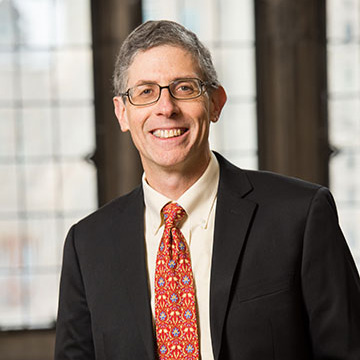
Professors Jon Bauer and Michelle Caldera are responsible for teaching and case supervision in the Asylum and Human Rights Clinic. Clinical Professor of Law Jon Bauer has been a member of the Law School's clinical faculty since 1988, and has designed and supervised a variety of clinical programs. Michelle Caldera, who started in July 2004, holds the William R. Davis Clinical Teaching Fellowship. Before joining the Asylum and Human Rights Clinic, she spent three years working as a staff attorney with the New York Association for New Americans, where she represented immigrants in all levels of administrative proceedings. She has also worked for Human Rights Watch, taught international human rights law at a Russian university, and served as a Peace Corps volunteer in Romania.

      
FACULTY/STAFF DIRECTORY         SITE MAP         TEXT-ONLY University of Connecticut School of Law
45 Elizabeth Street
Hartford, CT 06105-2290
(860) 570-5000